Rosanne AustinDiscovery Hub
Expert Guest2024-02-05·50 min

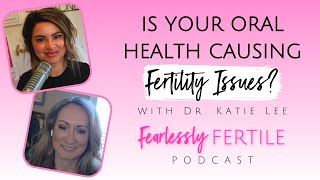
EP258 Are Your Teeth F*cking With Your Fertility? A Conversation with Dr. Katie Lee, DDS

EP258 Are Your Teeth F*cking With Your Fertility? A Conversation with Dr. Katie Lee, DDS

Dr. Katie Lee, DDS, reveals how oral infections can increase fertility issues by three times and shares simple testing and treatments that could transform your conception journey. This conversation explores the mouth-fertility connection that most doctors never discuss.

Megan· natural· Became a mama
Dr. Katie Lee, DDS· Oral health's impact on fertility and overall health

Miracle Mama: Megan

Full story →

Before

Had failed IVF, surrogacy, and donor eggs with no explanation for fertility struggles

Key Shift

Discovered and treated a raging oral infection she couldn't feel

After

Conceived naturally and had a healthy pregnancy

Dr. Katie Lee, DDS

Oral Systemic Health Specialist

Key Insights

  • - Certain oral bacteria increase infertility risk by 3x and cause stillbirths
  • - Oral bacteria affects both male and female fertility through different mechanisms
  • - Simple saliva testing can identify fertility-affecting bacteria from home
  • - Pregnant women should increase dental cleanings to every 3-4 months

Actionable Advice

  • + Get saliva testing to identify harmful bacteria before trying to conceive
  • + Use electric toothbrush and brush the gumline, not just teeth
  • + Floss or use waterpik twice daily - toothbrush only cleans 3 of 5 tooth surfaces
  • + Get dental cleanings every 3-4 months instead of every 6 months
  • + Avoid over-sterilizing products that kill all bacteria indiscriminately

The Hidden Connection Between Your Mouth and Your Fertility

Dr. Katie Lee reveals how oral infections can triple fertility risk through bacteria that enter the bloodstream via inflamed gums. Using the example of Megan's 10-year fertility struggle that ended after treating an oral infection, this section explores how the mouth-body connection affects conception, implantation, and pregnancy outcomes.

Why Male Oral Health Matters for Conception Success

Male fertility accounts for 50% of infertility cases, yet oral health is rarely addressed for men. Dr. Lee explains how specific bacteria kill sperm, reduce motility, and can reinfect female partners, emphasizing the need to treat both partners for optimal fertility outcomes.

Simple Testing and Treatment Solutions for Oral Health

Dr. Lee outlines straightforward approaches including at-home saliva testing, targeted periodontal treatments, and microbiome rebuilding. She debunks the insurance-driven six-month cleaning schedule in favor of science-based 3-4 month intervals, especially during conception and pregnancy.

Beyond Fertility: The Long-Term Health Stakes

Oral bacteria are linked to heart disease, diabetes, Alzheimer's, and cancer. Dr. Lee emphasizes how addressing oral health during the fertility journey sets the foundation for lifelong wellness, including reducing pregnancy complications like preeclampsia and gestational diabetes.

Questions This Episode Answers

Can oral health affect fertility

certain oral infections that you might not even know you have, because all of us are running around thinking that we would feel pain if we had an infection. Not true. Okay? So those things can increase your risk of fertility issues by three times.

Dr. Katie Lee2:03

Yes, certain oral infections can increase fertility issues by three times. Specific bacteria like Fusobacterium nucleatum can prevent ovulation, block embryo implantation, and even cause stillbirths by entering the bloodstream through inflamed gums.

How often should you get dental cleanings when trying to conceive

bacteria repopulate in the mouth within ninety days. So So if we're waiting six months, that's, like, double the time that we're having leaving that bacteria in the mouth.

Dr. Katie Lee37:58

Every 3-4 months instead of the standard 6 months. Bacteria repopulate in the mouth within 90 days, so waiting 6 months allows enough time for harmful bacteria to establish and potentially affect fertility.

Does male oral health affect fertility

the bacteria in the man causes their sperm to, it actually kills the sperm, it changes their shape, and it decreases their ability to swim.

Dr. Katie Lee18:40

Yes, oral bacteria in men can kill sperm, change their shape, and decrease their ability to swim. Male infertility accounts for 50% of all infertility cases, and men can also transfer harmful bacteria to their female partners.

What oral bacteria affects fertility the most

effing bacteria is actually responsible for causing stillbirths. And that is certainly on the rise.

Dr. Katie Lee15:46

Fusobacterium nucleatum is particularly dangerous for fertility. It inhibits ovulation, prevents embryo implantation, and can cause stillbirths. This bacteria is commonly found and acts as a transport for other harmful bacteria.

Can you test for oral bacteria at home

People like you mentioned, can contact me, I can ship them a test, they can do it from their house, I can go over results with them, and then work with their dentist to get them the treatment that they need.

Dr. Katie Lee36:47

Yes, saliva testing can be done from home to identify specific bacteria that affect fertility. Dr. Katie Lee offers these tests that can be shipped to patients, with results reviewed remotely before working with local dentists for treatment.

Why don't fertility doctors check oral health

dentistry was siloed from medicine over a hundred years ago. I mean, they literally just took dentistry out and put it on its own thing. And, you know, unfortunately, the ramifications of that is that no one's looking at the person as an entire being.

Dr. Katie Lee33:23

The healthcare system is overly specialized and siloed. Dentistry was separated from medicine over 100 years ago, so no one looks at the person as a whole being. Most fertility doctors focus only on reproductive organs without considering how oral health affects the entire body.

How to Optimize Your Oral Health for Fertility

Dr. Katie Lee's essential steps for protecting fertility through oral health

  1. 1

    Get tested first

    Order saliva testing to identify specific fertility-affecting bacteria before trying to conceive. Also get a 3D cone beam CT scan to detect hidden abscesses.

  2. 2

    Get professional cleaning

    Schedule a thorough periodontal cleaning every 3-4 months, not every 6 months. This prevents bacteria from repopulating beyond the 90-day cycle.

  3. 3

    Use proper brushing technique

    Use an electric toothbrush and focus on the gumline, not just teeth. Brush twice daily for two minutes, angling the brush at the junction between teeth and gums.

  4. 4

    Floss or waterpik daily

    Clean between teeth twice daily since toothbrushes only reach 3 of 5 tooth surfaces. Use regular floss or a waterpik if dexterity is an issue.

  5. 5

    Avoid over-sterilization

    Use gentle products that don't kill all bacteria indiscriminately. You want to preserve good bacteria while eliminating harmful strains.

  6. 6

    Rebuild your microbiome

    After treatment, take high-quality prebiotics and probiotics to repopulate with beneficial bacteria and maintain oral health balance.

All Teachings 8

Expert InsightChallenging2:22

Certain oral infections can increase your risk of fertility issues by three times, even when you feel no pain or symptoms

Dr. Katie Lee explains that Fusobacterium nucleatum bacteria specifically inhibits ovulation, prevents embryo implantation, and causes stillbirths. Megan, featured in a previous episode, had a 10-year fertility journey with failed IVF, surrogacy, and donor eggs until discovering and treating a raging oral infection.

Expert InsightEmpowering12:59

Oral bacteria don't stay in your mouth - they circulate through your bloodstream and target your reproductive system

Dr. Lee explains that when gums become permeable due to infection, bacteria enter the bloodstream through an enzyme called MMP8 that breaks down protective tissue barriers. This creates 'leaky gums' similar to leaky gut, allowing bacteria to reach reproductive organs.

Expert InsightEmpowering8:43

Male fertility is equally affected by oral bacteria, with specific bacteria killing sperm and decreasing motility

Dr. Lee treated both partners in a young couple struggling with infertility. The husband had bacteria affecting sperm motility, and after treating both partners, they conceived within months. She notes that two specific bacteria directly impact sperm's ability to swim.

Expert InsightChallenging21:53

Forty percent of pregnant people have some form of gum infection, increasing preterm birth risk by 30-50%

Dr. Lee states that oral bacteria increases risk of preeclampsia, gestational diabetes, and preterm birth. Only 10% of women who develop gestational diabetes are prediabetic before pregnancy, suggesting something during pregnancy triggers the condition.

Expert InsightChallenging37:38

The six-month dental cleaning rule came from insurance companies, not science - bacteria repopulate in 90 days

Dr. Lee explains that bacteria repopulate in the mouth within 90 days, yet insurance only covers cleanings every six months. She recommends cleanings every 3-4 months for optimal oral health, especially during conception and pregnancy.

Expert InsightEmpowering10:37

Simple saliva testing can identify fertility-affecting bacteria from home, followed by targeted treatments

Dr. Lee uses saliva tests to identify specific bacteria like Fusobacterium nucleatum and 3D cone beam CT scans to detect hidden abscesses. Treatments include periodontal cleanings, targeted therapies for specific bacteria, and microbiome rebuilding with probiotics.

Expert InsightChallenging30:48

Oral bacteria are linked to major diseases including heart disease, diabetes, and Alzheimer's

Dr. Lee directly links PG gingivalis bacteria to Alzheimer's disease and notes that oral bacteria correlate with pancreatic and colon cancers, heart disease, and diabetes. Seven out of eight leading causes of death in America are caused by inflammation.

Expert InsightEmpowering22:35

Stress and elevated cortisol shut down immune function, allowing harmful oral bacteria to proliferate

Dr. Lee explains that chronic stress releases cortisol, which suppresses the immune system and makes the body more prone to infections. This creates a cycle where bacteria proliferate, causing more inflammation and stress.

Episode Tone
4 challenging4 empowering

Key Teachings 8

Certain oral infections can increase your risk of fertility issues by three times, even when you feel no pain or symptoms

2:22

Oral bacteria don't stay in your mouth - they circulate through your bloodstream and target your reproductive system

12:59

Male fertility is equally affected by oral bacteria, with specific bacteria killing sperm and decreasing motility

8:43

Forty percent of pregnant people have some form of gum infection, increasing preterm birth risk by 30-50%

21:53

The six-month dental cleaning rule came from insurance companies, not science - bacteria repopulate in 90 days

37:38

Simple saliva testing can identify fertility-affecting bacteria from home, followed by targeted treatments

10:37

Oral bacteria are linked to major diseases including heart disease, diabetes, and Alzheimer's

30:48

Stress and elevated cortisol shut down immune function, allowing harmful oral bacteria to proliferate

22:35

Perspectives 3

If your teeth don't hurt, there's nothing wrong with your oral health

CONSIDER: Silent oral infections are the most dangerous because bacteria survive by not causing pain until catastrophic damage occurs

Dental problems are genetic and run in families

CONSIDER: Oral bacteria are transmitted between family members through kissing, sharing utensils, and close contact

Fertility problems are primarily the woman's issue

CONSIDER: Infertility is a 50-50 game, and male oral health directly impacts sperm quality and can reinfect female partners

Quotable Moments

certain oral infections that you might not even know you have, because all of us are running around thinking that we would feel pain if we had an infection. Not true. Okay? So those things can increase your risk of fertility issues by three times.

Rosanne Austin2:03

if you're thinking to yourself, oh, I you know, I brush and floss every day. No. No. No. No. No. No. No. No. No. Stick around.

Rosanne Austin3:24

the bacteria in the man causes their sperm to, it actually kills the sperm, it changes their shape, and it decreases their ability to swim.

Dr. Katie Lee18:40

don't let your insurance dictate how you take care of your health for frick's sake, man.

Rosanne Austin43:38

It's like showering and not washing your armpits. Right? Like, you have to wash every part of your body. You have to clean every part of your tooth.

Dr. Katie Lee40:22

information is power. And when you have power, you can take control.

Dr. Katie Lee33:54

This Story Proves

Natural conception after multiple treatment failuresHidden oral infection revealed10-year journey success

You Might Be Interested In

When you fight from vision rather than despair, you bring completely different energy to your fertility journey

Francois observed that Super Cat's entire mood and motivation changed when she shifted from fighting from despair to fighting from hope after doing the Fearlessly Fertile program, leading to their natural conception at 38 after six failed IVFs.

Nobody knows you like you, and at the end of the day, doctors go home to their children - you have to do what you need to do to go home to yours

Super Cat was told she needed donor eggs and a gestational carrier after six failed IVFs, but by advocating for herself and doing her own research, she conceived naturally at 38 during a Christmas vacation in New York.

Ninety percent of medical school curriculum focuses on pharmacology, while 80% of medical schools don't require a single nutrition class for doctors to graduate

Calley Means, former pharma lobbyist, reveals that Stanford Medical School and Harvard Medical School are among the institutions that don't require nutrition education, despite food being the primary driver of metabolic dysfunction affecting fertility.

PCOS and fertility issues are fundamentally connected to insulin resistance and metabolic dysfunction, which can be reversed through dietary interventions

Calley's sister Casey, a Stanford-trained surgeon, discovered that patients with fertility issues, depression, diabetes, and high cholesterol all shared root metabolic dysfunction that could be addressed through food and exercise interventions rather than separate medications for each condition.