Rosanne AustinDiscovery Hub
Teaching2026-02-16·14 min

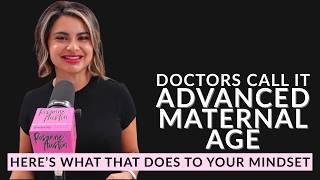
EP364: Advanced Maternal Age: Let's Be Done With This BS Label

EP364: Advanced Maternal Age: Let's Be Done With This BS Label

Rosanne challenges the outdated label "advanced maternal age" for women over 35, arguing these pejorative terms harm women's fertility identity and mindset. She advocates for rejecting fear-based labels and embracing empowering alternatives as more women over 40 drive birth rates up.

The Problem with Age-Based Medical Labels

Rosanne traces the origins and problems of labels like 'geriatric' and 'advanced maternal age' for women over 35. She argues these pejorative terms are outdated and don't reflect how women are living in 2026, when women over 40 are having more babies than teenagers.

The Psychological Impact of Medical Programming

Drawing on Dr. Bernie Siegel's observations about terminal cancer patients, Rosanne explains how medical labels can psychologically program negative outcomes. She questions whether fear-based messaging about age-related risks actually constitutes healthcare or harm.

Taking Back Your Fertility Identity

Rosanne advocates for peer-to-peer conversations with healthcare providers and rejecting automatic deference to medical authority. She encourages women to create empowering self-labels and celebrate their readiness for motherhood rather than accepting society's judgment about timing.

Questions This Episode Answers

What is advanced maternal age and when does it start?

advanced maternal age begins at thirty five. It's like, you look at a thirty five year old today and you're like, oh, is that person really old enough to have a baby?

Rosanne Austin10:25

Advanced maternal age is a medical label automatically applied to pregnant women over 35, regardless of their individual health or risk factors. It begins at age 35.

Why are medical labels like advanced maternal age harmful?

when somebody was given six months to live, very often, because of that programming to hand our authority over to people in white coats, some people would die right on time

Rosanne Austin4:53

These labels can psychologically program women to expect negative outcomes, similar to how terminal patients often die on schedule. They create fear and doubt at a crucial time when women need confidence for fertility success.

Are women over 35 really having more babies now?

There was a report that came out toward the end of twenty twenty five, early twenty twenty six, that was talking about how women over forty were having more babies than girls in their teens

Rosanne Austin5:34

Yes, there's been a dramatic increase. Reports from late 2025 show women over 40 are having more babies than teenagers, representing a baby boom for women over 40.

How should I handle my doctor using the term advanced maternal age?

you have sovereign authority over your mind and your body. In twenty twenty six, women should expect and certainly not tolerate anything less

Rosanne Austin11:03

Have a peer-to-peer conversation with your healthcare provider. Tell them you've been informed of the risks, you accept them, and you don't want to discuss age anymore. You have sovereign authority over your mind and body.

What should I call myself instead of advanced maternal age?

I'm fearless. I'm fertile. I've never been more ready for this baby. My heart is ready, my body is ready, my soul is ready

Rosanne Austin12:26

Create your own empowering labels like "I'm fearless, I'm fertile, I've never been more ready for this baby. My heart is ready, my body is ready, my soul is ready."

Is it really risky to have a baby over 35?

Even if there was a slightly higher risk of having complications with a pregnancy that occurs over thirty five? Do we really wanna exacerbate that risk by labeling women with all of these scary terms

Rosanne Austin7:26

Even if there are slightly higher statistical risks, meeting women's desire to have families with fear, negativity and scary labels actually exacerbates risk rather than providing genuine healthcare.

How to Reject Harmful Age-Based Labels in Fertility

Steps to take control of your fertility identity and reject fear-based medical terminology

  1. 1

    Recognize your sovereign authority

    Understand that you have ultimate authority over your mind and body, and healthcare conversations should be peer-to-peer

  2. 2

    Have the conversation

    Tell your healthcare provider you've been informed of age-related risks, you accept them, and you don't want to discuss age anymore

  3. 3

    Create empowering labels

    Replace negative labels with affirming statements like 'I'm fearless, I'm fertile, I've never been more ready for this baby'

  4. 4

    Focus on your readiness

    Emphasize that your heart, body, and soul are ready, regardless of what age-based statistics suggest

All Teachings 6

TeachingChallenging1:57

The labels "geriatric" and "advanced maternal age" are pejorative, judgment-laden terms no longer in step with how women over 35 are living in 2026

Women over 40 are now having more babies than teenagers according to late 2025/early 2026 reports, representing a baby boom for women over 40.

TeachingChallenging4:33

Medical labels automatically applied based solely on age, not individual medical history or risk factors, can psychologically program women to expect negative outcomes

Dr. Bernie Siegel observed that cancer patients given six months to live would often die right on time due to programming to hand authority over to people in white coats.

TeachingEmpowering6:04

Women today choose to have families later due to pursuing higher education, financial stability, and expecting more from relationships - advanced maternal age begins at 35 but reflects outdated social realities

This trend has been happening since the 1970s, with women often not feeling completely ready for family until they're in so-called advanced maternal age.

TeachingFierce7:16

Even if there are slightly higher risks with pregnancy over 35, exacerbating that risk with scary labels and fear-based messaging is not healthcare

Women over 35 are immediately met with statistics about how hard it will be to get pregnant and pregnancy risks, with no concern about the physiological impact of this negativity.

TeachingEmpowering10:43

You have sovereign authority over your mind and body - healthcare provider conversations should be peer to peer, human being to human being

While healthcare providers have medical degrees, you know yourself best and should take their opinions and information for what they are - opinions and information.

TeachingEmpowering12:36

Instead of counting women out who want babies over 35, society should celebrate them as they're driving birth rates up

Women over 40 are going to be driving the birth rate up, which should be celebrated rather than condemned with antiquated labels like geriatric and advanced maternal age.

Episode Tone
2 challenging3 empowering1 fierce

Key Teachings 6

The labels "geriatric" and "advanced maternal age" are pejorative, judgment-laden terms no longer in step with how women over 35 are living in 2026

1:57

Medical labels automatically applied based solely on age, not individual medical history or risk factors, can psychologically program women to expect negative outcomes

4:33

Women today choose to have families later due to pursuing higher education, financial stability, and expecting more from relationships - advanced maternal age begins at 35 but reflects outdated social realities

6:04

Even if there are slightly higher risks with pregnancy over 35, exacerbating that risk with scary labels and fear-based messaging is not healthcare

7:16

You have sovereign authority over your mind and body - healthcare provider conversations should be peer to peer, human being to human being

10:43

Instead of counting women out who want babies over 35, society should celebrate them as they're driving birth rates up

12:36

Perspectives 2

Women over 35 should accept being labeled "advanced maternal age" or "geriatric" because medical professionals know best

CONSIDER: You can reject harmful labels and create your own empowering fertility identity - "I'm fearless, I'm fertile, I've never been more ready for this baby"

Medical labels applied because of age are necessary and protective

CONSIDER: Labels based solely on age without individual risk assessment can psychologically program negative outcomes and should be questioned

Quotable Moments

I'm fearless. I'm fertile. I've never been more ready for this baby. My heart is ready, my body is ready, my soul is ready.

Rosanne Austin12:26

you have sovereign authority over your mind and your body. In twenty twenty six, women should expect and certainly not tolerate anything less.

Rosanne Austin11:03

when somebody was given six months to live, very often, because of that programming to hand our authority over to people in white coats, some people would die right on time

Rosanne Austin4:53

Even if there was a slightly higher risk of having complications with a pregnancy that occurs over thirty five? Do we really wanna exacerbate that risk by labeling women with all of these scary terms

Rosanne Austin7:26

Women over forty are gonna be driving the birth rate up and that's something we should be celebrating, not condemning

Rosanne Austin12:36

You Might Be Interested In

Stop arguing in favor of perceived limitations on your fertility journey - most limits aren't even ones you consciously chose

There is a baby boom for women 40 and up according to recent information and US Census data. Claire Danes got pregnant naturally at 44 despite feeling shame and thinking it wasn't possible.

There is a woman right now on a planet of almost 8 billion people who is older than you, has a worse diagnosis, and is giving birth somewhere

Recent data shows a baby boom for women 40 and up, and the US Census confirms this trend. Women are getting pregnant naturally and with IVF in their 40s and 50s all the time.

Physicians are not magicians - medical predictions are not absolute verdicts on what's possible for your fertility

Dr. Nisha, a physician with two doctoral degrees, was told at 44 she had undetectable AMH and was premenopausal with no chance of conception, yet conceived naturally in one cycle after changing her mindset approach.

The thought to be a mother is there because it was meant to be there - desires don't appear randomly in your heart

Dr. Nisha explains that just like she didn't randomly think about becoming a chef or going on shows, the deep desire for motherhood exists for a purpose and shouldn't be dismissed by statistics or outside opinions.